
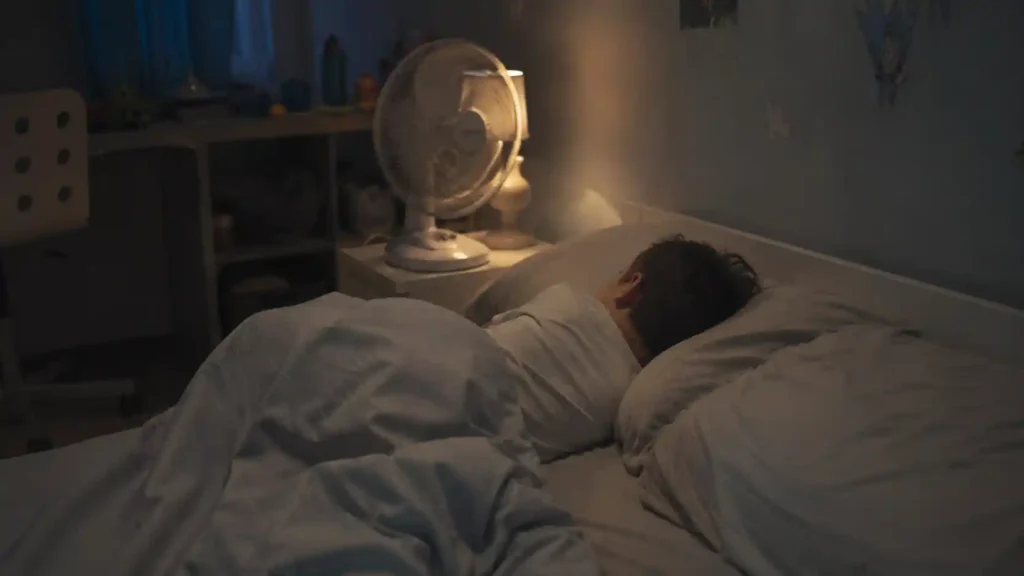
If your pillow feels cool at bedtime but hot an hour later, the problem is usually not your imagination. Your head warms the pillow surface, and some pillows trap that heat instead of letting it move away.
If you are wondering why does my pillow feel hot at night, the main reason is heat retention. Dense fill, poor airflow, high loft, tight pillowcases, waterproof protectors, sweat, and a warm room can hold heat around your head, face, and neck.
Start with the simple fixes first: change the pillowcase, remove thick protectors, lower the pillow height, and cool the room. If those steps do not help, the pillow fill may be the real problem.
This guide explains common bedding causes first, then covers when night sweats may point to a body-related issue. It is not medical advice.
Quick answer: Your pillow feels hot at night because your head warms the pillow faster than the pillow can release heat. Dense foam, packed polyester, high loft, tight pillowcases, waterproof protectors, sweat, and warm room air can all trap heat near your head and neck.
Affiliate disclosure: This article may contain affiliate links. As an Amazon Associate, we earn from qualifying purchases. If you buy through these links, we may earn a small commission at no extra cost to you. We only recommend products that fit the cooling problems explained in this guide.
Quick Pillow Heat Checklist
| What to Check | Why It Matters | Fast Fix |
|---|---|---|
| Pillow fill | Dense foam and polyester can hold heat | Try shredded latex, buckwheat, wool, or cotton |
| Pillow height | A high pillow can wrap around your face and neck | Use one pillow or remove some fill |
| Pillowcase fabric | Tight or thick fabric can block airflow | Try cotton percale, linen, or bamboo viscose |
| Pillow protector | Waterproof layers can trap heat and sweat | Try one night without it |
| Room heat | Warm air makes the pillow release heat more slowly | Cool the room and add air movement |
| Night sweats | Body heat and sweat can soak the pillow surface | Track symptoms and check health triggers |
The CDC says better sleep habits can include keeping your bedroom quiet, relaxing, and cool. CDC sleep guidance supports the idea that your sleep setting matters, not just your pillow.
Why Your Pillow Gets Hot: Heat, Airflow, Sweat, and Loft
Your head gives off heat all night. That heat moves into the pillow through direct contact. A pillow feels cool at first because the surface is cooler than your skin. After a while, the pillow absorbs heat from your head and face.
A pillow becomes hot when it absorbs heat from your head faster than it can release it. Dense fill, tight fabric, high loft, trapped sweat, and warm room air slow that heat release.
1. Dense Fill Blocks Airflow
Some pillow fills are packed tightly. Solid memory foam is a common example. It molds around your head, but it can also slow air movement.
When air cannot move through the pillow, heat stays near the surface. The pillow acts like insulation. It holds warmth close to your skin instead of letting it spread out.
2. Your Face and Neck Add More Heat
A pillow does not only touch the back of your head. It may also touch your cheeks, jaw, ears, and neck. More contact means more heat transfer.
Side sleepers often feel this more than back sleepers. When you sleep on your side, one side of your face presses into the pillow. If the fill is dense or the cover is tight, warm air gets trapped around the face.
3. Sweat Makes the Pillow Feel Warmer
Sweat helps the body cool itself. It works best when moisture can leave the skin and dry. If sweat sits between your skin and the pillowcase, the surface can feel damp and warm.
Some fabrics hold moisture more than others. Thick polyester covers, flannel cases, and some waterproof protectors can make the pillow feel hotter.
4. The Pillow Warms Up Over Time
A pillow rarely feels hot the second you lie down. Heat builds over minutes and hours. First the surface warms. Then the fill below the surface warms. After that, the pillow has less cool material left to absorb heat.
This is why flipping the pillow helps for a short time. You move your head to the cooler side, but that side can warm up too.
Key takeaway: If your pillow feels hot within 30 to 60 minutes, check the fill, pillowcase, protector, and loft before buying a new pillow.
Which Pillow Materials Trap Heat and Which Ones Stay Cooler?
Pillow fill plays a big role in heat buildup. Dense materials can trap warm air, while looser fills let air move more freely. Certain fills also hold sweat, while others dry faster and feel cooler through the night.
Your pillow may feel hot because the inside material acts like insulation. The cover can add to the problem, but the fill usually matters most.
Pillow Fill Heat Comparison
| Pillow Material | Heat Retention | Airflow | Moisture Control | Best For |
|---|---|---|---|---|
| Solid memory foam | High | Low | Low to medium | Pressure relief, not hot sleepers |
| Shredded memory foam | Medium | Medium | Medium | Foam feel with more air space |
| Shredded latex | Low to medium | Medium to high | Medium | Support with better airflow |
| Buckwheat hulls | Low | High | Medium | Very hot sleepers who like firm support |
| Down | Medium | Medium | Low to medium | Soft feel in cooler rooms |
| Down alternative polyester | Medium to high | Low to medium | Low | Budget use, not ideal for heat |
| Cotton | Low to medium | Medium | Medium | Simple, natural feel |
| Wool | Low to medium | Medium | High | People who wake up damp |
Best airflow pick: If your pillow feels hot because dense foam traps heat, an adjustable shredded latex pillow is one of the strongest upgrades. The Turmerry Green Natural Organic Shredded Pillow uses real shredded latex, so air can move between the pieces. You can also remove fill to lower the loft and reduce the warm pocket around your face and neck.
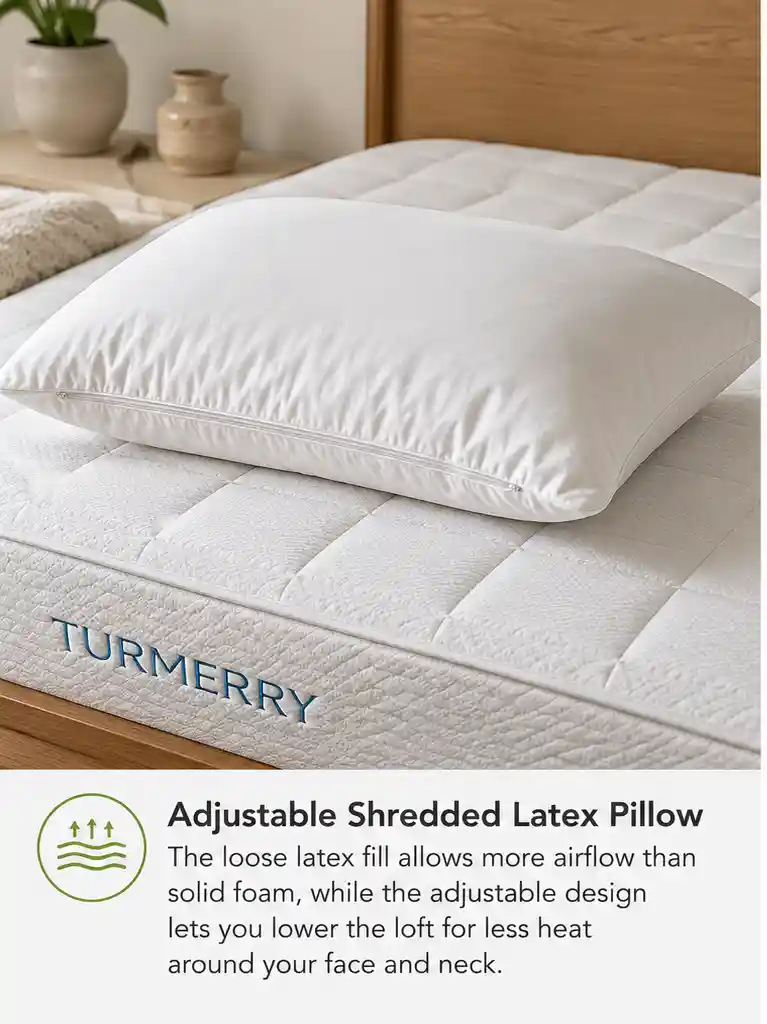
Affiliate pick: Check the current price for this adjustable shredded latex pillow if you want better airflow and height control in one pillow.
Why Memory Foam Often Feels Hot
Memory foam reacts to body heat. That is why it softens and molds around your head. The close fit can trap warm air around your face and neck.
A solid block of foam has less open space for air to move through. Shredded memory foam can sleep cooler than solid foam because the small pieces leave air gaps. It may still run warm if the pillow is overfilled or covered with thick polyester fabric.
Cooler Fill Choices
| If You Want | Try This | Why It Helps |
|---|---|---|
| Cooler foam feel | Shredded latex | Leaves air space and gives support |
| Firm and airy support | Buckwheat hulls | Air moves between the hulls |
| Better sweat control | Wool | Can feel drier for sweaty sleepers |
| Simple natural feel | Cotton | Breathable and easy to pair with light cases |
| Foam with less heat | Shredded memory foam | Better airflow than solid foam |
Quick buying rule: If your pillow feels hot every night, do not start with gel. Start with airflow. Choose shredded latex, buckwheat hulls, wool, cotton, or another fill that leaves space for air to move.
Key takeaway: The worst match for many hot sleepers is a thick solid memory foam pillow with a tight polyester cover. That mix can trap heat from the head, block airflow, and hold sweat near the skin.
How Pillow Height Traps Heat Around Your Face and Neck
Pillow height, also called loft, can make your pillow feel hotter at night.
A pillow may have a cooler fill, but it can still feel warm if it is too high, too soft, or too fluffy. When your head sinks into a tall pillow, the sides of the pillow can rise around your face. This traps warm air near your cheeks, ears, jaw, and neck.
A pillow should support your head, but it should not bury your face.
Signs Loft Is the Problem
| Sign | What It Means |
|---|---|
| Your face feels buried | The pillow is too high, too soft, or both |
| One cheek gets hot | The pillow traps heat on the contact side |
| Your neck sweats | Warm air collects under the jaw and neck |
| You keep punching the pillow flat | The fill may be too tall or too packed |
| You sleep cooler on a flatter pillow | Loft is likely part of the problem |
How to Fix Pillow Loft Heat
- Remove some fill if your pillow has an adjustable design.
- Use one pillow instead of stacking two.
- Choose medium loft if you sleep on your side and overheat.
- Use low loft if you sleep on your stomach.
- Pick a fill with air space, such as shredded latex, buckwheat hulls, or loose cotton.
Key takeaway: A high pillow can create a small heat pocket around your face and neck. Lowering the loft can make the pillow feel cooler without changing the whole sleep setup.
Can a Pillowcase or Protector Make Your Pillow Hotter?
Yes. Your pillowcase and protector sit between your skin and the pillow fill. If that layer blocks air or holds sweat, your pillow can feel hot even when the fill is not the main cause.
Best Pillowcase Fabrics for Hot Sleepers
| Pillowcase Fabric | Cooling Level | Best Feature |
|---|---|---|
| Cotton percale | High | Crisp, light, and breathable |
| Linen | High | Airy feel and good moisture control |
| Bamboo viscose | Medium to high | Soft and smooth |
| Tencel lyocell | Medium to high | Smooth and good with sweat |
| Silk | Medium | Smooth surface, less crisp |
| Polyester microfiber | Low to medium | Soft, but can hold warmth |
| Flannel | Low | Warm feel, not best for hot sleepers |
Watch Out for Waterproof Pillow Protectors
A pillow protector can help keep sweat, oil, and allergens out of the pillow. But some protectors trap heat. This often happens with waterproof or plastic-like layers.
Try one night without the protector. Keep the same pillowcase and room setup. If your pillow feels cooler, the protector was likely part of the problem.
Key takeaway: A breathable pillow can still feel hot if it is wrapped in a thick, tight, or waterproof layer.
Room Temperature, Bedding, and Your Sleep Setup
Your pillow may feel hot because the whole sleep setup is too warm. The pillow touches your head, so it feels like the main problem. But heat can also come from the room, mattress, blanket, pajamas, and humidity.
Room Heat and Humidity
A warm room makes your pillow warm faster. Your head gives off heat, and the pillow absorbs it. If the air around you is already warm, the pillow cannot release heat as well.
Humidity can make the pillow feel damp because sweat dries more slowly. A damp pillowcase can feel hot and sticky even if the room temperature seems normal.
Bedding, Mattress, and Sleepwear
A thick comforter can raise your body heat. Once your body gets too warm, your head and neck may sweat more. That heat then moves into the pillow.
Dense foam mattresses can also hold warmth under your body. That extra heat can rise around your shoulders, neck, and head, making the pillow feel hotter.
Warm pajamas, hoodies, thick collars, fleece tops, and synthetic sleepwear can trap heat near the neck and shoulders. That heat sits close to the pillow.
Quick Sleep Setup Test
- Set the room cooler than usual.
- Use a light blanket.
- Switch to a cotton percale or linen pillowcase.
- Wear lighter sleepwear.
- Keep the same pillow.
If your pillow feels cooler, your sleep setup was adding heat. If it still feels hot, the pillow fill, loft, or cover is more likely the main cause.
Night Sweats: When the Heat May Come From Your Body
Sometimes the pillow is not the main cause. Your body may be producing more heat or sweat at night. The pillow only makes that heat more noticeable because it touches your head, neck, and face.
MedlinePlus explains that sweating helps the body stay cool, and that sweating can increase with heat, exercise, anxiety, fever, menopause, and other triggers. Read more at MedlinePlus: Sweating.
Pillow Heat vs. Night Sweats
| Sign | More Likely Cause |
|---|---|
| One side of the pillow feels hot | Pillow fill, loft, case, or protector |
| Both pillow and sheets feel damp | Night sweats or warm bedding |
| You wake with wet hair or neck | Sweat buildup |
| The pillow feels cooler after changing the case | Fabric or protector issue |
| You sweat even in a cool room | Body-related trigger |
| You also have fever, weight loss, chest pain, or shortness of breath | Speak with a health professional |
NCBI Bookshelf explains that body temperature control depends on the balance between heat gain and heat loss. If bedding blocks heat loss, you may feel warmer during sleep. See NCBI Bookshelf: Temperature Regulation.
Medical note: A hot pillow is usually a bedding issue. Heavy, new, repeated, or unexplained night sweats may need medical care, especially if they come with fever, chest pain, shortness of breath, fast heartbeat, or unexplained weight loss.
How to Keep Your Pillow Cool at Night
You do not always need a new pillow right away. Start with the layers closest to your face, then work down to the fill, loft, and room setup.
9 Fixes to Try First
- Change the pillowcase. Try cotton percale, linen, bamboo viscose, or Tencel lyocell.
- Remove thick protectors. Test one night without a waterproof protector.
- Lower the pillow loft. Remove fill or stop stacking pillows.
- Choose a cooler fill. Try shredded latex, buckwheat hulls, wool, cotton, or shredded foam.
- Use a fan. Move warm air away from your head and pillow.
- Use lighter bedding. Heavy blankets can raise body heat.
- Wear lighter sleepwear. Avoid thick collars and fleece near the neck.
- Wash pillowcases often. Sweat, oil, and skin cells can make the surface feel warmer.
- Air out the pillow. Pull the blanket away each morning so moisture can dry.
Try this tonight: Use a cotton percale or linen pillowcase, remove any waterproof protector, and lower the pillow height if your face feels buried. If your pillow still heats up after two nights, compare the fill material next.
5-Night Cooling Test
| Night | What to Test |
|---|---|
| Night 1 | Use a cotton or linen pillowcase |
| Night 2 | Remove the pillow protector |
| Night 3 | Lower the pillow height |
| Night 4 | Use lighter bedding |
| Night 5 | Add a fan or more air movement |
Change one thing at a time. This helps you find the real cause instead of guessing.
When Should You Replace a Hot Pillow?
Sometimes small fixes are enough. A new pillowcase, lower loft, or better airflow can solve the problem.
But an old or poor-quality pillow may keep trapping heat no matter what you change. If the fill has broken down, clumped, flattened, or absorbed too much sweat, the pillow may need to be replaced.
Signs Your Pillow Is Too Old
| Sign | What It Means |
|---|---|
| The pillow feels hot every night | The fill may trap heat |
| It feels flat or lumpy | Air cannot move well through the fill |
| It smells musty | Sweat and moisture may be trapped inside |
| Your pillowcase feels damp often | The pillow may hold moisture |
| You wake with neck pain | The pillow may no longer support you |
| You keep flipping it all night | The surface warms too fast |
| It looks yellow or stained | Sweat and oil have built up |
Best Replacement Features for Hot Sleepers
| Feature | Why It Helps |
|---|---|
| Adjustable fill | Lets you lower the loft |
| Shredded fill | Leaves more air space |
| Breathable outer cover | Helps heat leave the surface |
| Natural fibers | Often feel drier than thick synthetics |
| Medium support | Keeps your head lifted without burying your face |
| Washable cover | Helps remove sweat and oil |
Replace your pillow if it stays hot after you change the case, remove the protector, lower the loft, and cool the room.
Best Pillow Types for Hot Sleepers
The best pillow for hot sleepers has three traits: open space inside the fill, a breathable cover, and the right height for your sleep position.
| Pillow Type | Best For | Watch Out For |
|---|---|---|
| Shredded latex | Side and back sleepers who want support | Can feel springy |
| Buckwheat hulls | Very hot sleepers who like firm support | Firm, heavy, and sometimes noisy |
| Wool | People who wake up damp | Can flatten over time |
| Cotton | Stomach and back sleepers who want a simple feel | May compress with use |
| Shredded memory foam | Foam fans who want more air space | Can still run warm if overfilled |
| Cooling gel foam | People who want a cool first touch | The cool feel may fade during the night |
Best quick pick: For most hot sleepers, an adjustable shredded latex pillow is a strong first choice because it gives support, airflow, and height control. For very hot sleepers who like firm support, buckwheat hulls are often cooler.
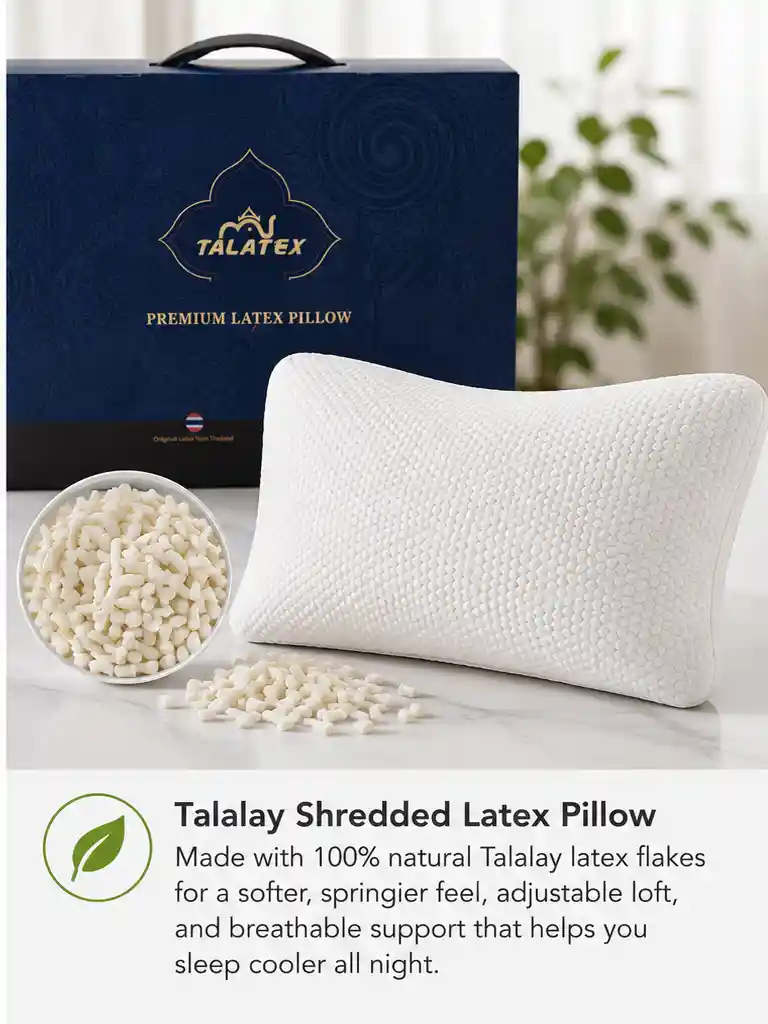
Talalay latex alternative: A Talalay shredded latex pillow can be a good fit if you want a softer, springier feel than many Dunlop latex pillows. Check that the fill is real latex, not shredded memory foam, and choose an adjustable design so you can lower the loft if your face feels buried.
Cooling Pillow Myths That Make People Buy the Wrong Pillow
Myth 1: A Cold Pillow Means It Will Stay Cool All Night
Some pillows feel cool when you first lie down. This can come from gel, a smooth cover, or a cold room. But that cool touch can fade. Once your head warms the surface, the pillow still needs airflow.
Myth 2: Gel Solves Every Heat Problem
Gel can cool the pillow surface for a short time, but breathable fill matters more for all-night comfort. Once gel warms up, the pillow still needs airflow to move heat away.
Myth 3: Memory Foam Is Always Bad
Solid memory foam often sleeps warm, but not all foam pillows are the same. A shredded or ventilated foam pillow with a breathable cover can sleep cooler than a solid foam block.
Myth 4: A Higher Pillow Gives Better Support
A higher pillow is not always better. If it is too tall, it can push your neck out of line and trap heat around your face. Good support means your head and neck stay in a natural line.
Myth 5: A Cooling Pillow Fixes Night Sweats
A cooling pillow may reduce heat around your head. It may also help your pillowcase feel drier. But it cannot treat a health issue. If sweating is heavy, new, repeated, or unexplained, speak with a health professional.
Frequently Asked Questions
Why does my pillow get hot so fast?
Your pillow gets hot fast because your head gives off heat, and the pillow absorbs it. If the fill is dense, the heat stays near the surface. Solid memory foam, packed polyester, high loft, and thick covers often make this worse.
Why does memory foam get so hot?
Memory foam softens with body heat and molds around your head. Traditional solid memory foam is dense, so it can absorb heat and release it slowly. That close fit can reflect warmth back toward your face and neck during the night.
Do cooling pillows actually stay cool all night?
Most cooling pillows do not stay ice cold all night. Gel pads can warm up to match your body temperature. The best cooling pillows focus on breathable materials, loose fill, and moisture-control covers that help reduce heat buildup.
Does pillow height affect temperature?
Yes. A high pillow can let your head sink into the center while the sides rise around your ears, cheeks, and neck. That warm pocket can trap heat and make you feel hotter than you would on a lower pillow.
Can a pillowcase make my pillow hotter?
Yes. A thick or synthetic pillowcase can block airflow and hold sweat near your skin. Cotton percale, linen, bamboo viscose, and Tencel lyocell often feel cooler than flannel or heavy microfiber.
Can a waterproof pillow protector make my pillow hot?
Yes. A waterproof protector can trap heat if it uses a plastic-like barrier. If your pillow feels cooler without the protector, switch to a thinner breathable protector.
Why does only one side of my pillow feel hot?
This usually happens because one side is in direct contact with your head and face. That side absorbs heat first. When you flip the pillow, the other side feels cooler because it has not warmed up yet.
What pillow material stays coolest?
Buckwheat hulls and shredded latex are often strong picks for hot sleepers. Buckwheat has open air space between the hulls. Shredded latex gives support while allowing more airflow than solid foam.
Why does my pillow feel hot even when my room is cold?
Your pillow may be trapping heat from direct contact with your head. Dense fill, high loft, tight fabric, a waterproof protector, and sweat can warm the pillow even in a cool room.
Why do I sweat on my pillow at night?
You may sweat because the pillow traps heat, the room is too warm, your bedding is too heavy, or your body has a sweat trigger. If sweating is heavy, new, repeated, or linked with other symptoms, speak with a health professional.
How can I cool my pillow quickly?
Use a breathable pillowcase, remove thick protectors, lower the pillow height, and add air movement with a fan. You can also let the pillow air out during the day so trapped moisture can dry.
Should I replace my pillow if it feels hot every night?
Yes, if simple fixes do not help. Replace it if it is flat, lumpy, stained, musty, or always warm. A worn pillow can trap heat and sweat even when the room is cool.
Final Answer: Why Does My Pillow Feel Hot at Night?
Your pillow feels hot at night when heat from your head has nowhere to go. Dense foam, packed polyester, high loft, tight pillowcases, waterproof protectors, sweat, and warm bedding can all trap heat around your face and neck.
Start with the cheapest fixes first: change the pillowcase, remove thick protectors, lower the loft, and use lighter bedding. If the pillow still feels hot, replace dense fill with a more breathable option such as shredded latex, buckwheat hulls, wool, cotton, or a well-ventilated shredded foam pillow.
If you wake up soaked, sweat in a cool room, or have symptoms like fever, chest pain, shortness of breath, fast heartbeat, or unexplained weight loss, speak with a health professional.
Best first step: Change the pillowcase tonight and remove any thick protector. If the pillow still feels hot after two nights, check the loft and fill next.